
Can equipment reach the tank?
Fences, buildings, landscaping and narrow routes can affect delivery and placement. The plan should account for how the old tank will be removed and the replacement installed.
Concerned about an old steel tank, a deteriorating cover or visible corrosion? Talk with Dominick about the tank’s condition, access to your property and the work needed to replace it.
Serving Orange, Sullivan & Ulster Counties, NY.
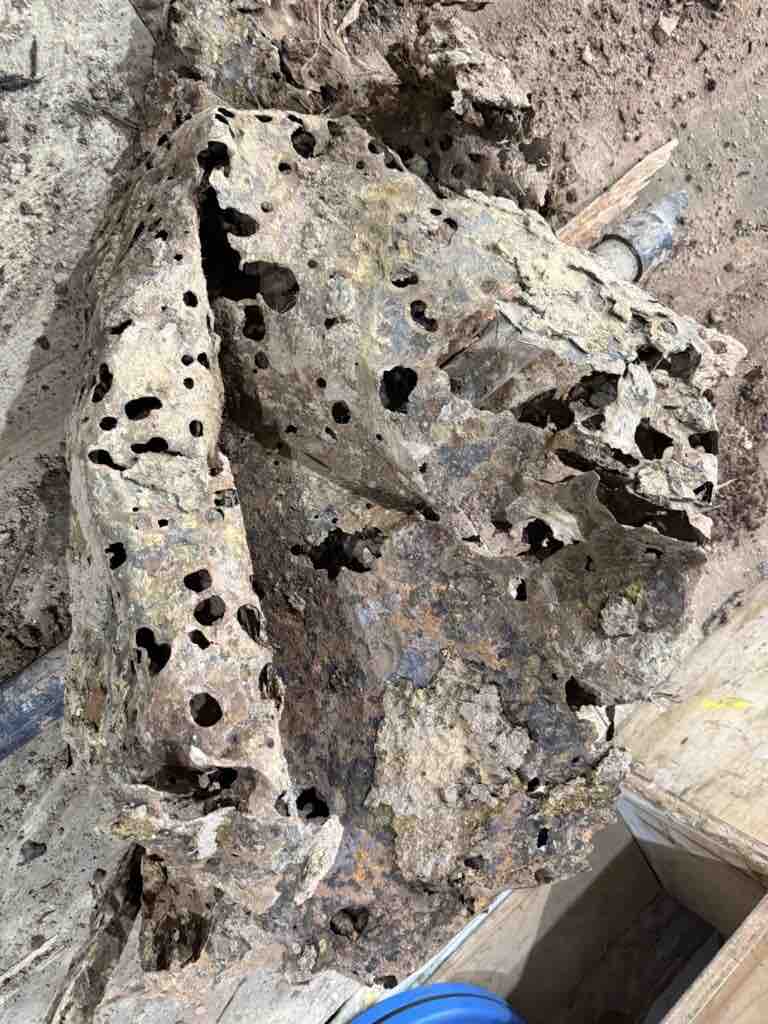
An older metal tank may still receive wastewater even when parts of its structure have deteriorated. Age, corrosion and the condition of the lid all matter when deciding what needs attention.
Start with an assessment of the existing tank and its connections. Replacing the tank is a different scope of work from replacing the entire septic system.
Do not stand on a rusted cover or approach an area that is sinking. Keep children, pets and vehicles away and contact a septic professional. Never enter a septic tank.
Concrete and poly tanks have different handling and installation requirements. Access is an important consideration, but it should not be the only one.
Fences, buildings, landscaping and narrow routes can affect delivery and placement. The plan should account for how the old tank will be removed and the replacement installed.
Groundwater, soil conditions, burial depth and loading restrictions matter. A lighter tank still needs the right bedding, backfill and installation method.
Tank capacity, connections, access openings and applicable requirements need to be considered together. The condition of the remaining system also affects the decision.
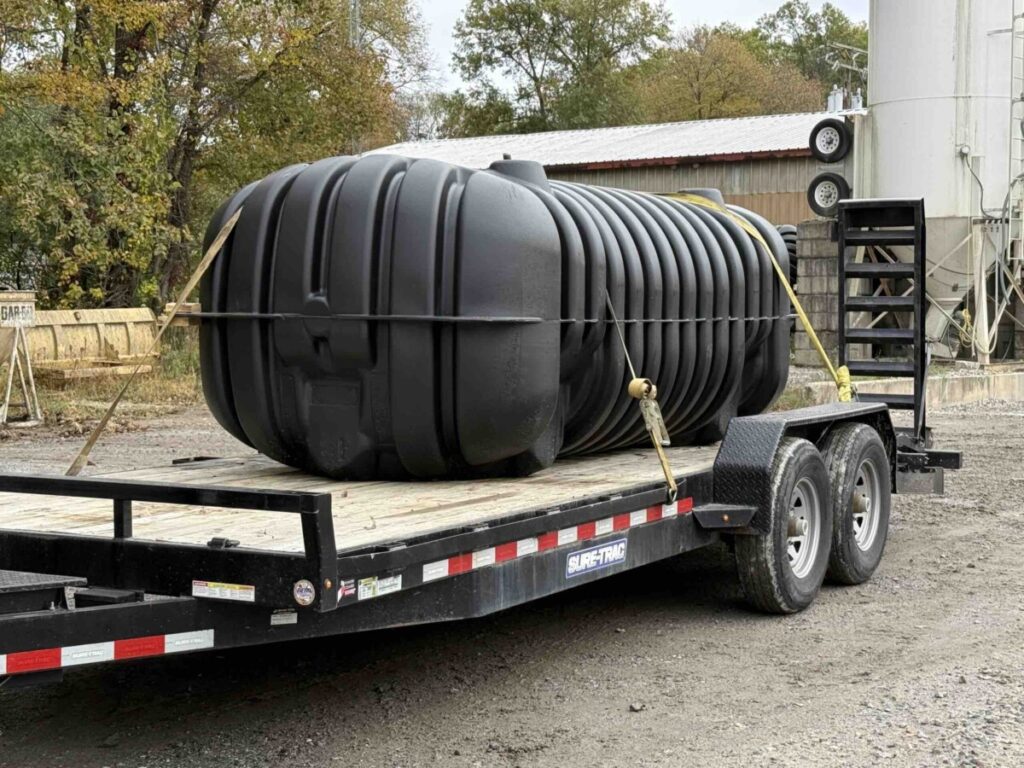
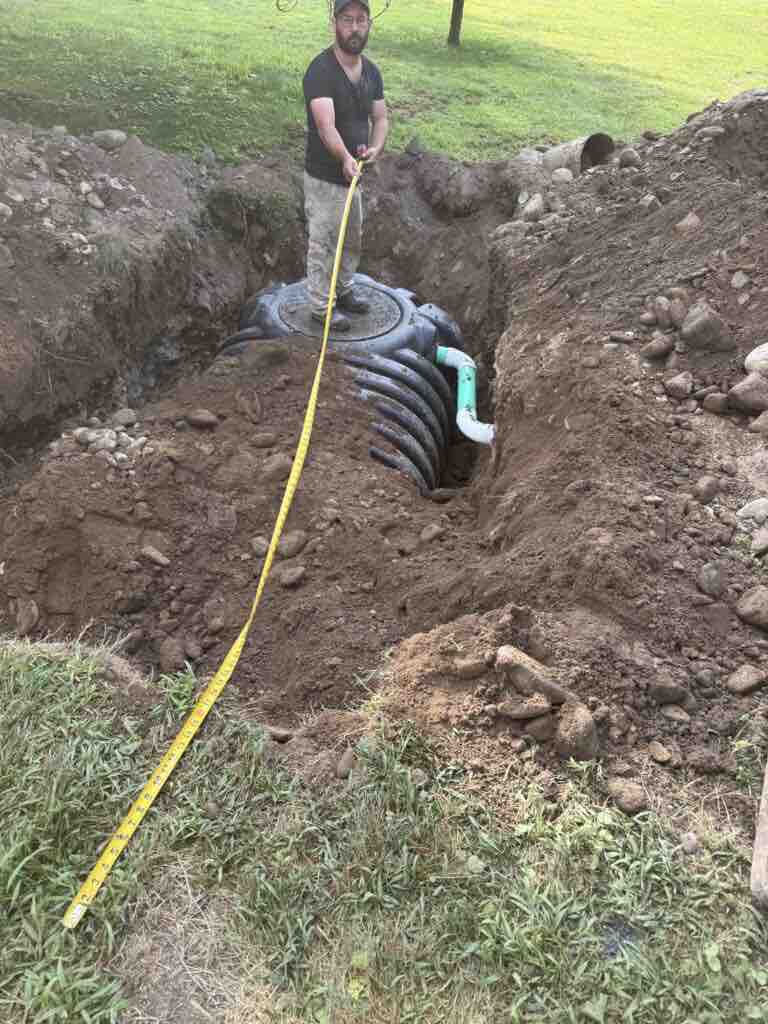
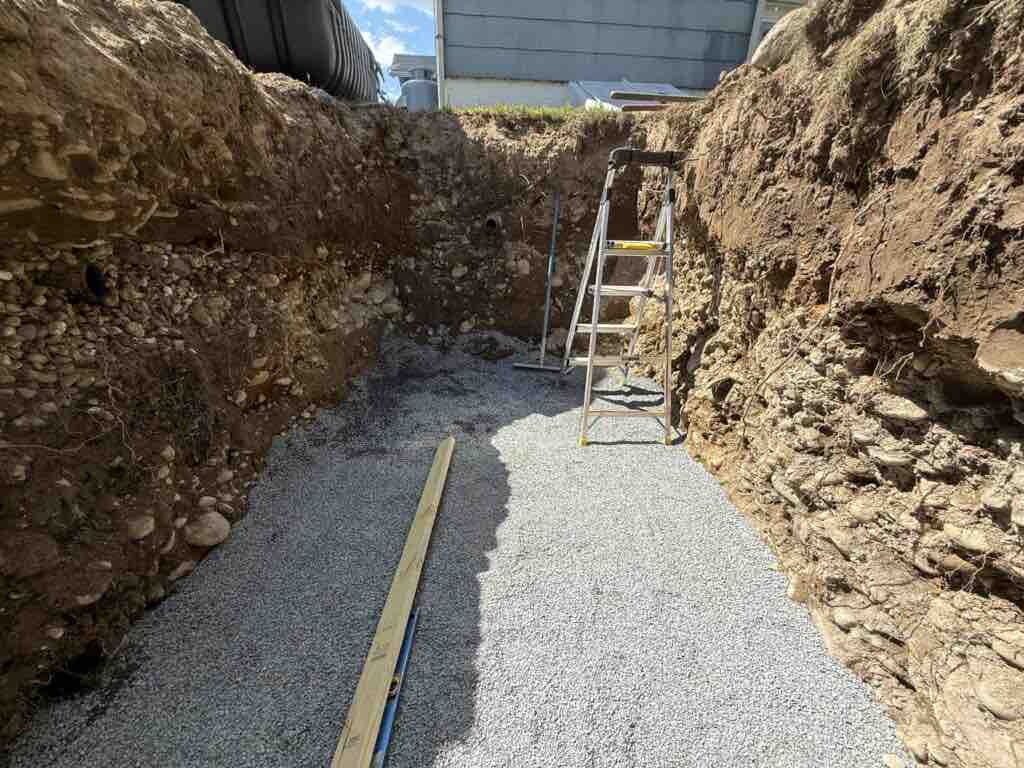
This Hurleyville project shows the old tank being uncovered, the replacement tank and piping, and the work area after backfilling. The close-up of the removed metal illustrates why the condition of an older tank deserves attention.
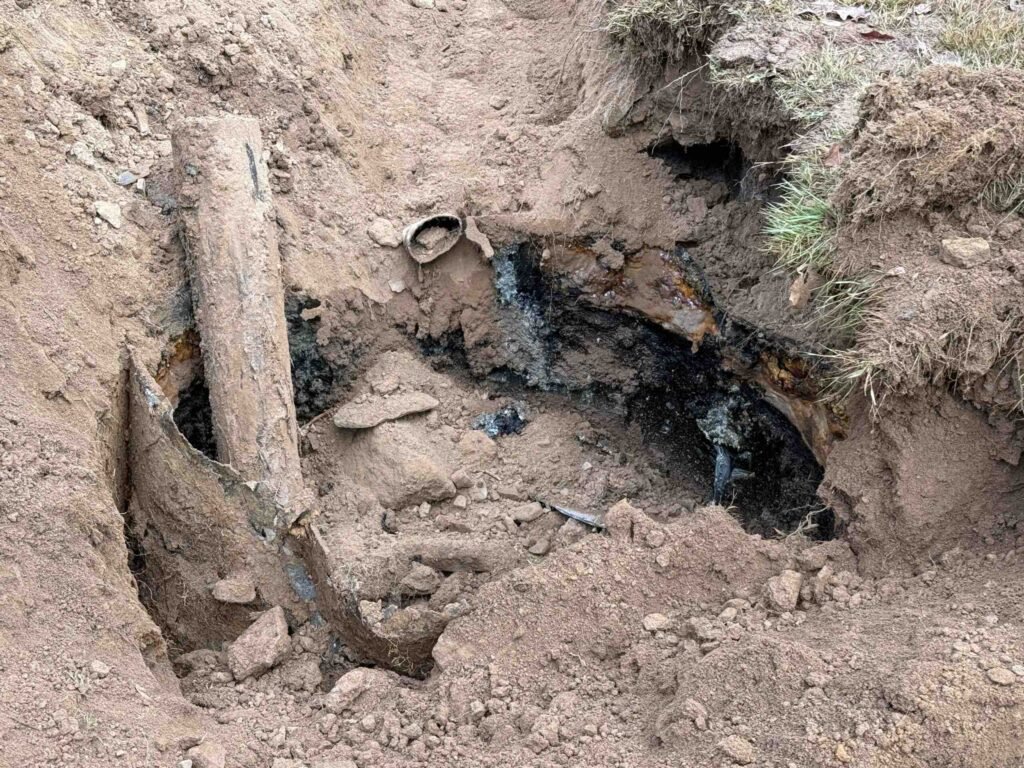
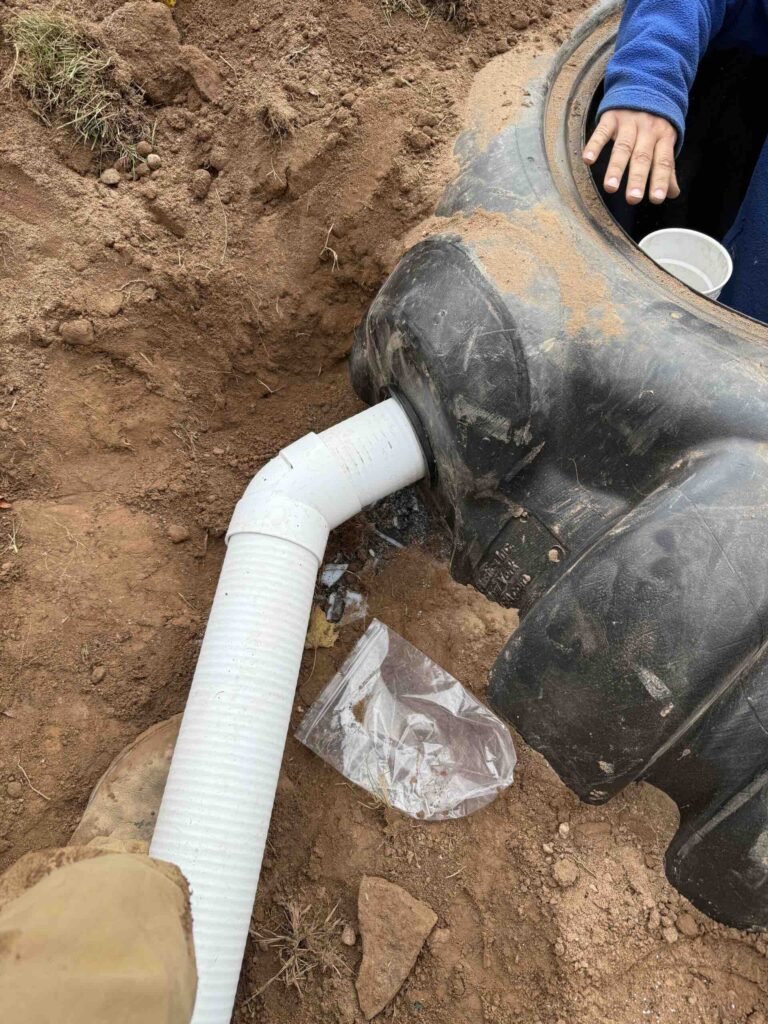
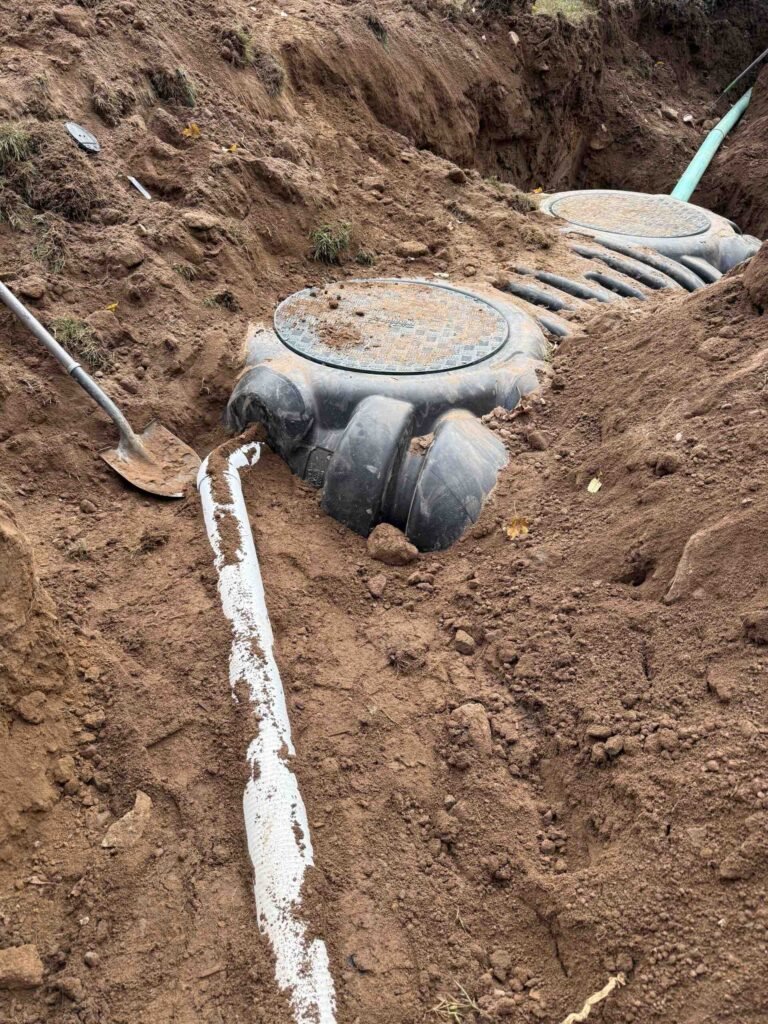
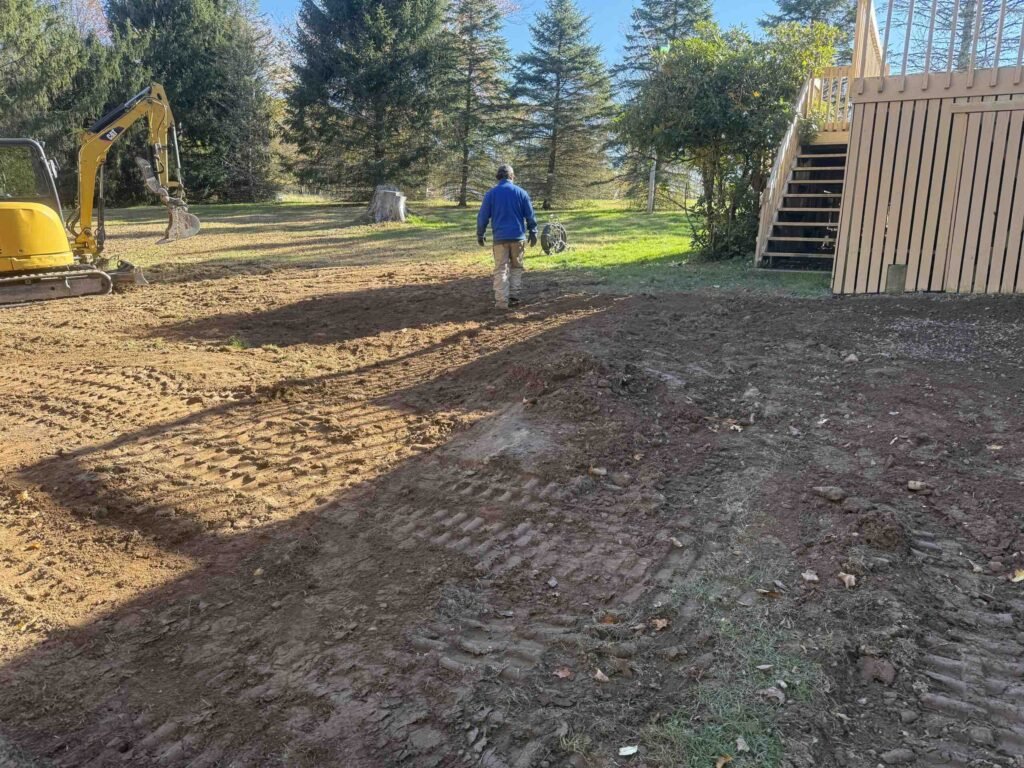
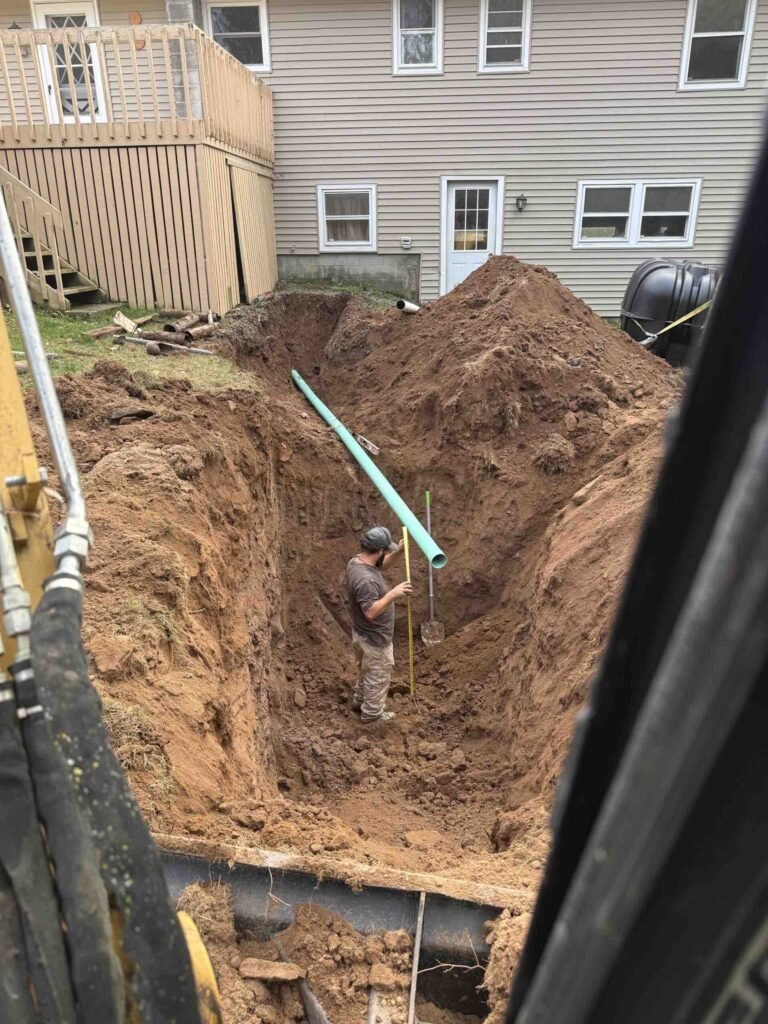
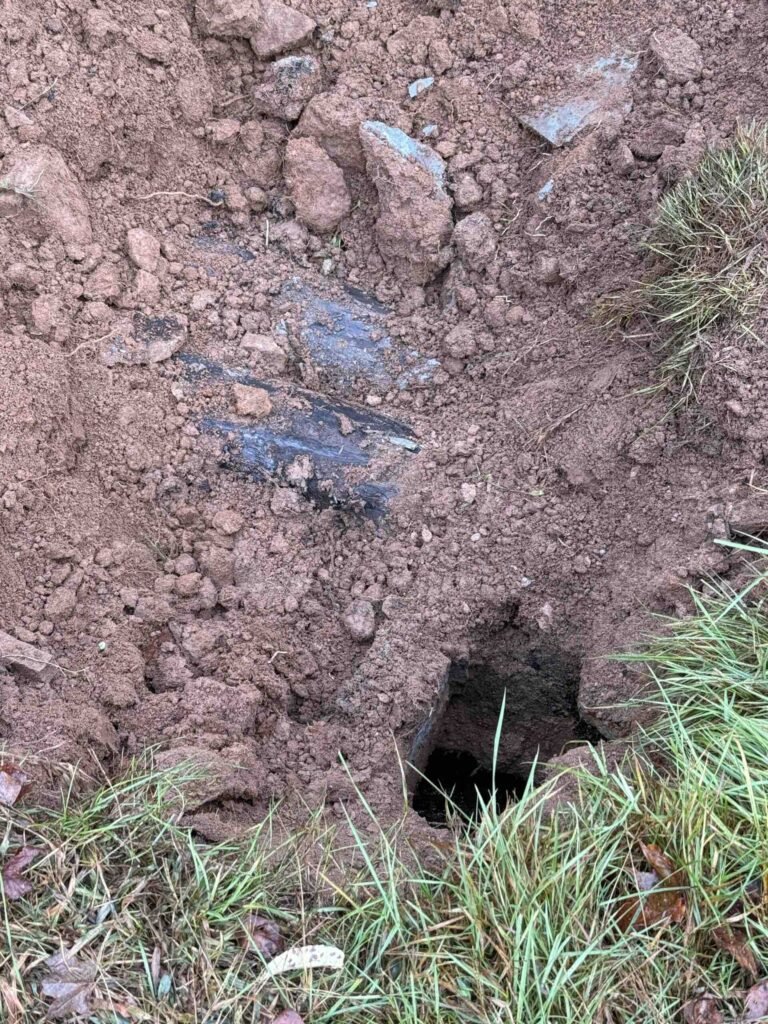
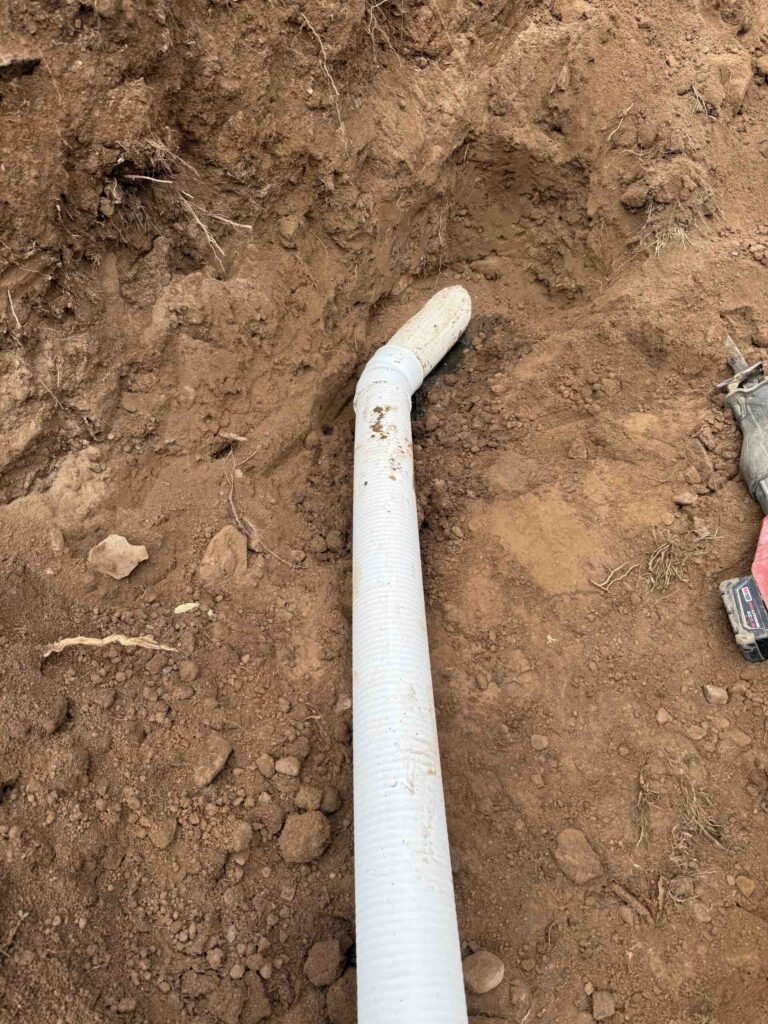
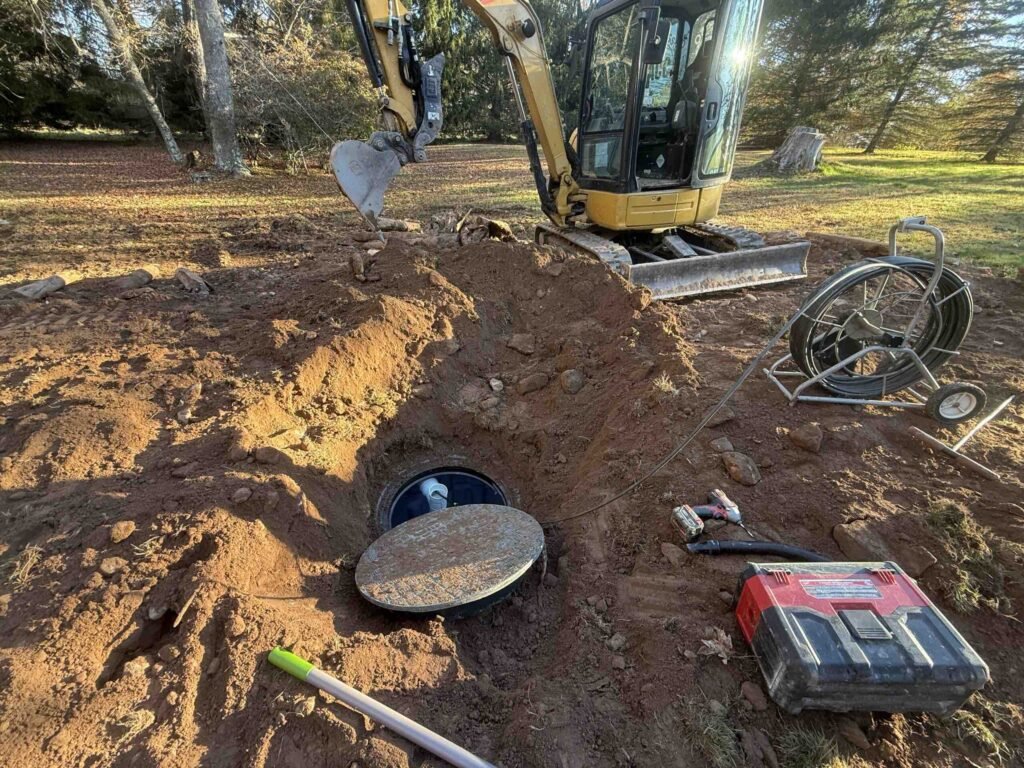
These photos document the excavation, prepared base, baffle piping and backfill work at another replacement project. Select any photo to open a larger view.
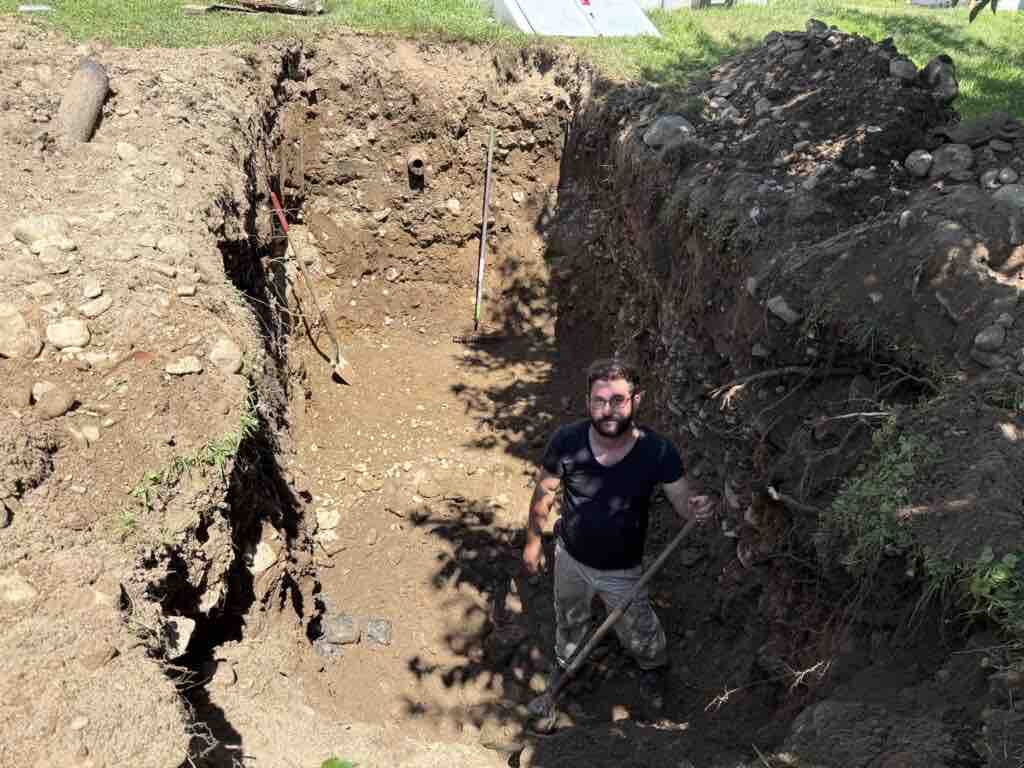
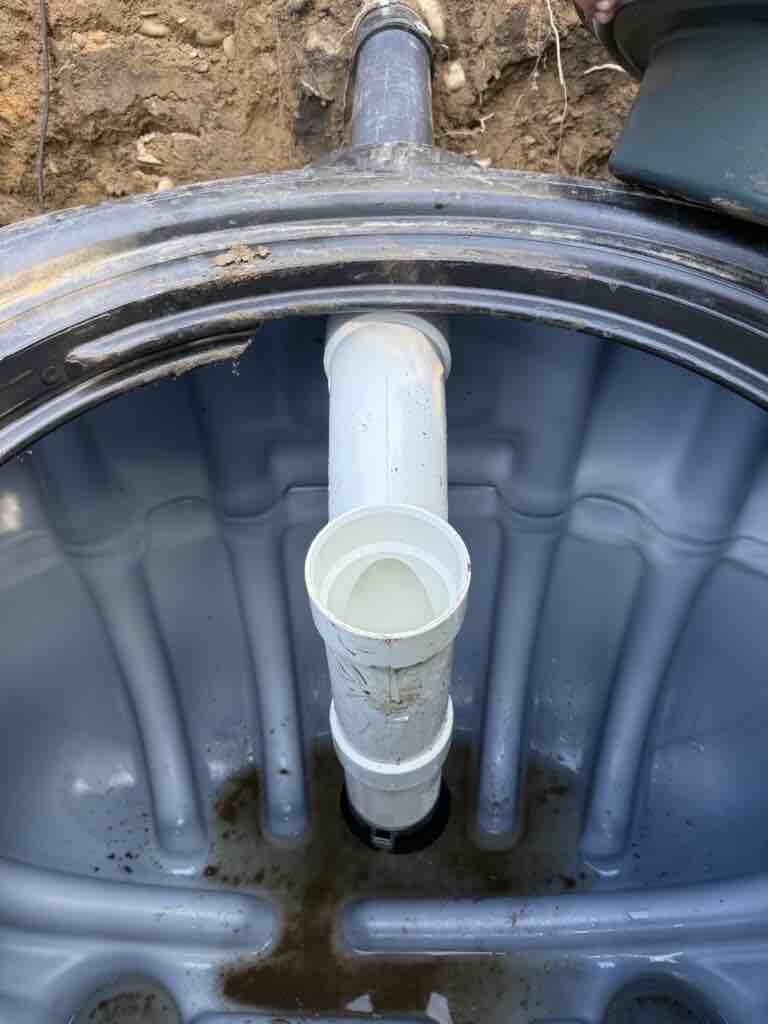
Tell Dominick where the tank is, what you know about it and whether you have inspection findings or system records. We’ll discuss access and the information needed to plan the work.
Discuss tank condition, inlet and outlet connections, property access and the remaining system.
Confirm the proposed tank, excavation, pumping arrangements, removal, connection work and any required approvals.
Account for the manufacturer’s installation requirements, pipe elevations and future access for servicing.
Clarify connection checks, backfilling, cleanup and what restoration is included in the estimate.
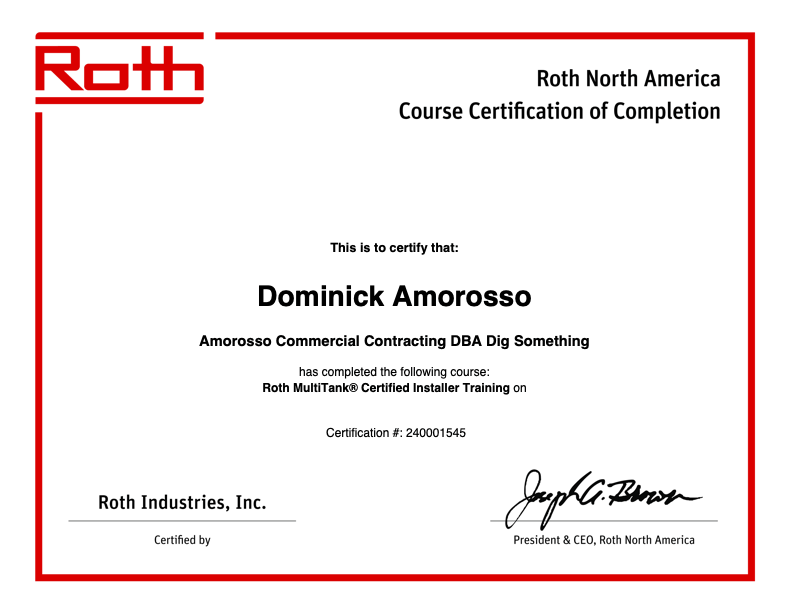
Our original project page includes the Roth certificate shown here. The important discussion for your project is the specific tank, its installation requirements and the warranty terms that apply to it.
Ask about bedding, backfill, site suitability and documentation before work begins. Warranty coverage should be confirmed for the selected product rather than assumed for every poly tank.
A clear explanation helps you compare the proposed work and make an informed decision.
Condition matters, and age alone is not a complete assessment. Visible deterioration or a suspected weak cover deserves prompt professional attention. Keep clear of the area until it has been evaluated.
Sometimes. A tank-only replacement depends on the condition and suitability of the rest of the system and applicable requirements. A new tank does not resolve an unrelated drainfield problem.
There is no single choice for every property. Access, site conditions, tank specifications and installation requirements influence the selection. We’ll discuss the options relevant to your project.
That depends on their condition and how they connect to the new tank. The estimate should explain what piping is included and how additional damage discovered during excavation would be handled.
Tank size and material, excavation depth, access, removal, piping and restoration affect the scope. Share your address and any inspection report so we can discuss the work needed for a meaningful estimate.
Excavation creates disturbance. Before work starts, discuss equipment access, what will be protected, the cleanup included and whether grading, seed or other restoration is part of the estimate.
Discuss piping damage, baffle issues and other existing-system concerns.
Explore septic repairs →Investigate visible conditions inside accessible piping.
Explore inspections →See our Accord project involving an old metal tank and root-packed piping.
See the Accord project →Call Dominick with your location and what you know about the system. Serving Orange, Sullivan and Ulster Counties, New York.