
A new concrete tank
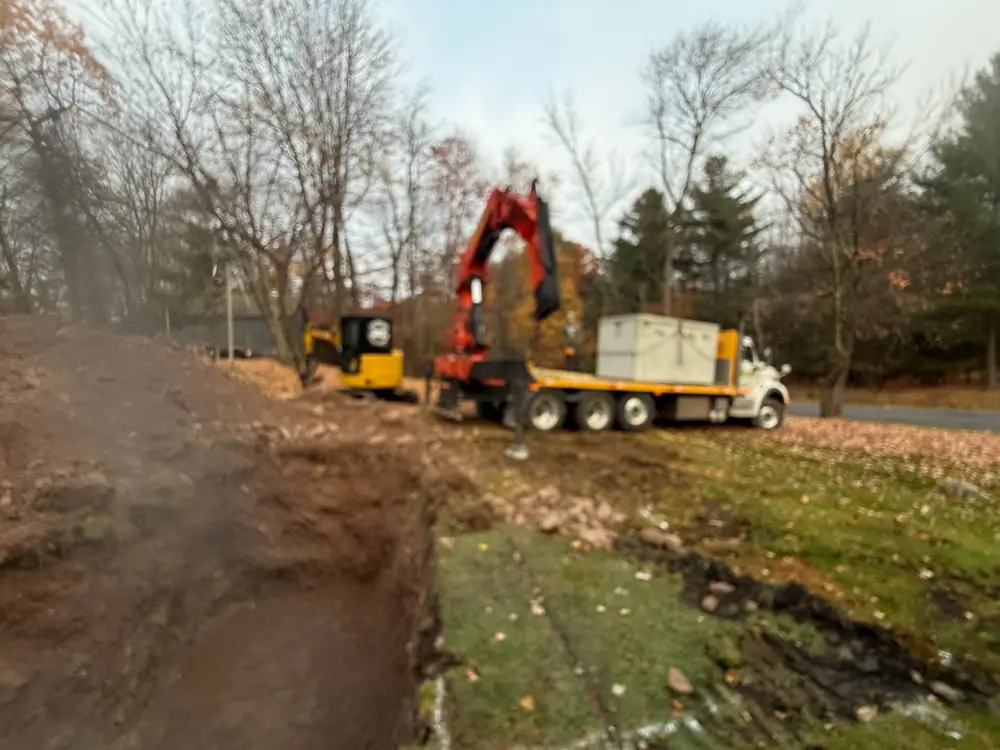
A 1,250-gallon concrete septic tank was installed as part of this complete replacement. The tank is the first stage of the system, separating and retaining solids before liquid effluent moves onward.
A new 1,250-gallon concrete tank. Two Eljen fields. A complete replacement, documented from open excavation to the backfilled yard.
Speak directly with Dominick, the owner.
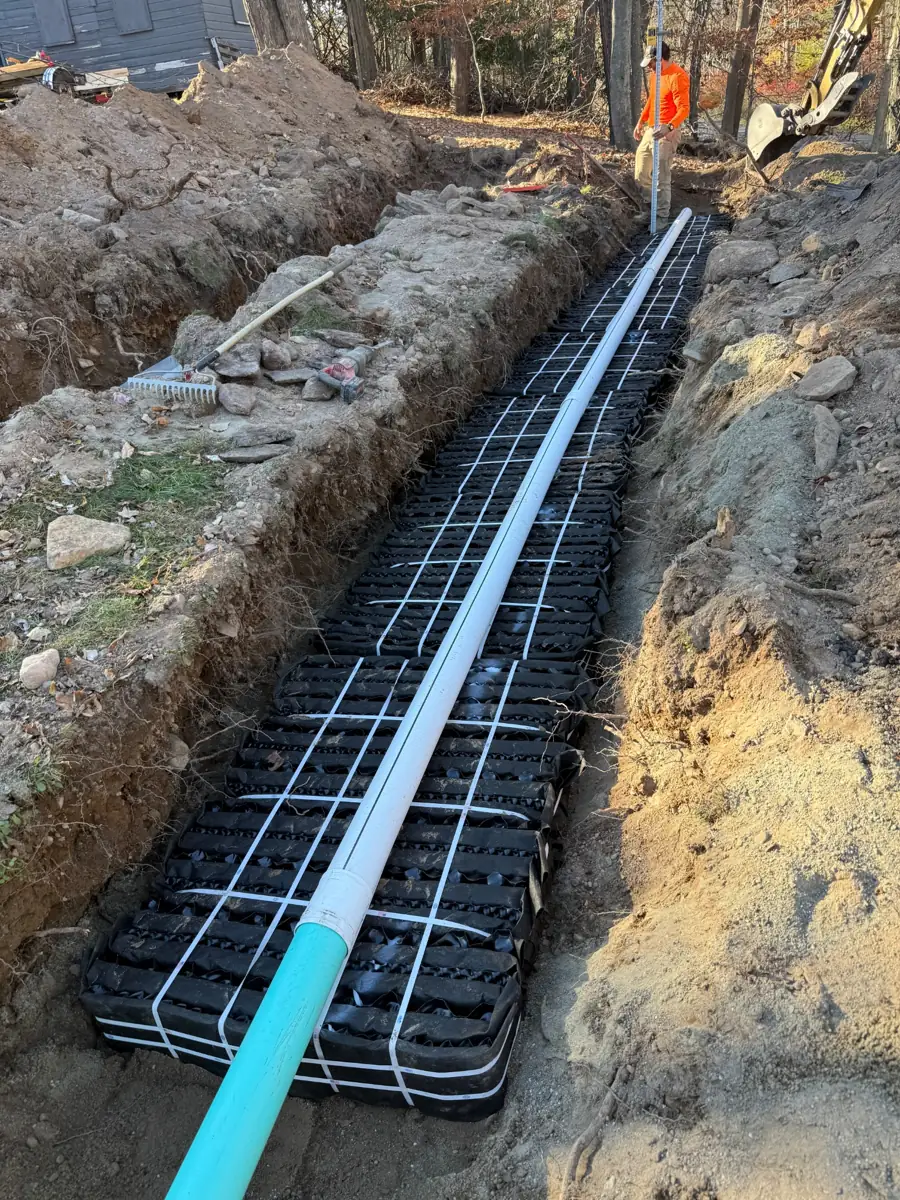
This Monticello project involved replacing the septic system with a new concrete tank and two Eljen fields. The work extended beyond the tank itself: excavation, field installation, new pipe connections and backfilling all formed part of the project.
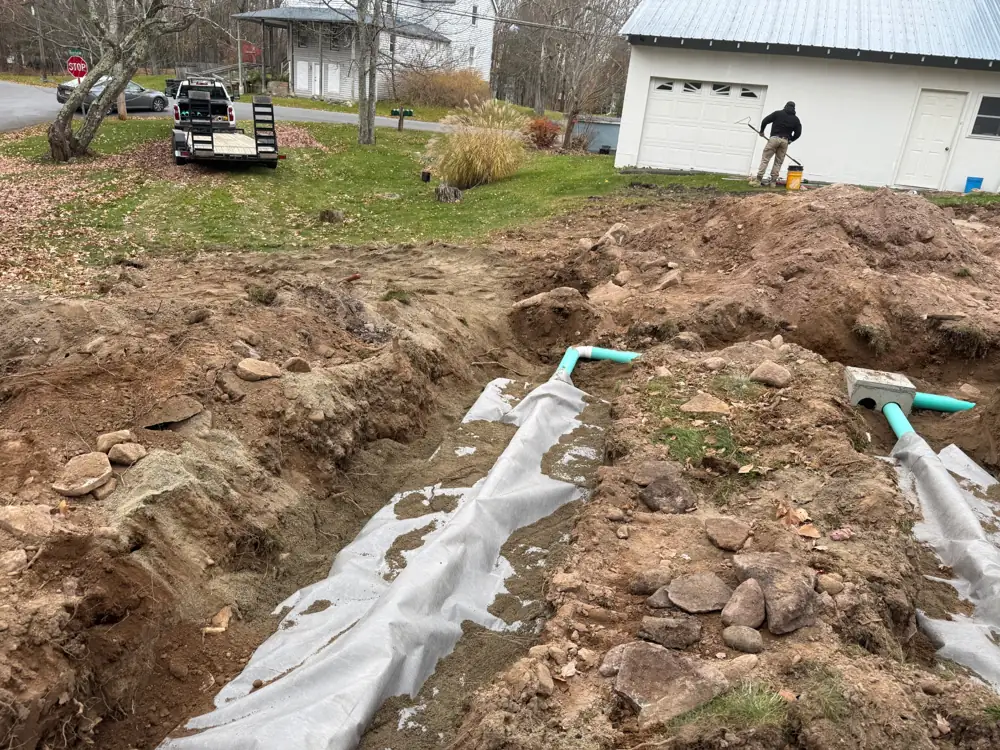
The photographs below show the parts of the installation that homeowners rarely get to see once the work is covered. From the distribution box to the modules in the field, each component has a role in moving wastewater through the system.
A 1,250-gallon concrete septic tank was installed as part of this complete replacement. The tank is the first stage of the system, separating and retaining solids before liquid effluent moves onward.
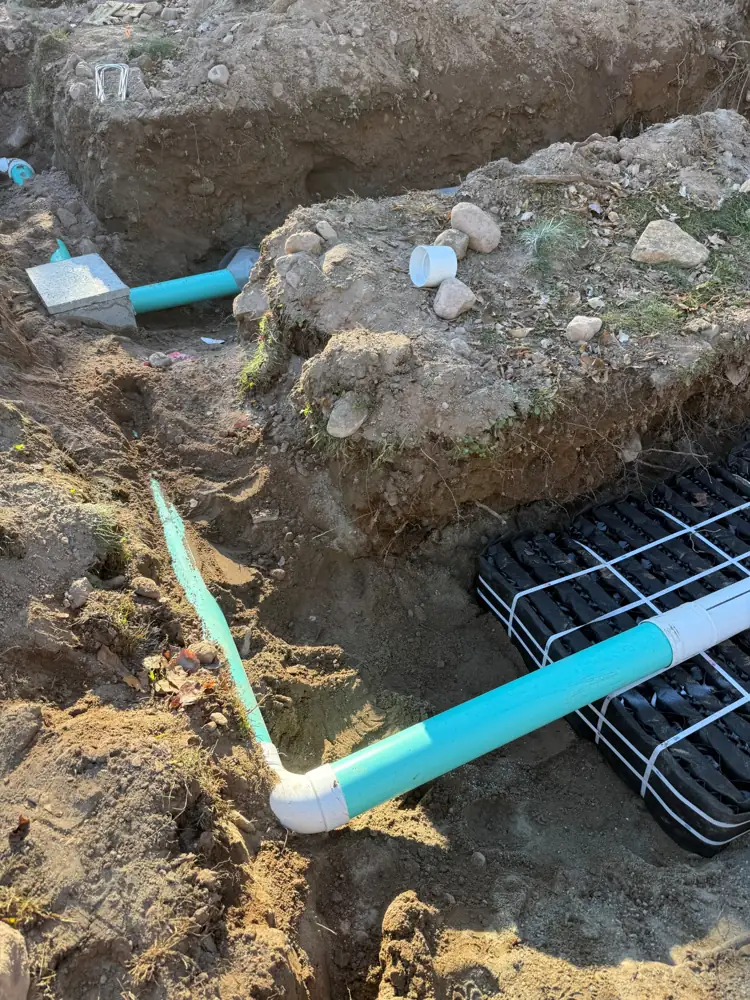
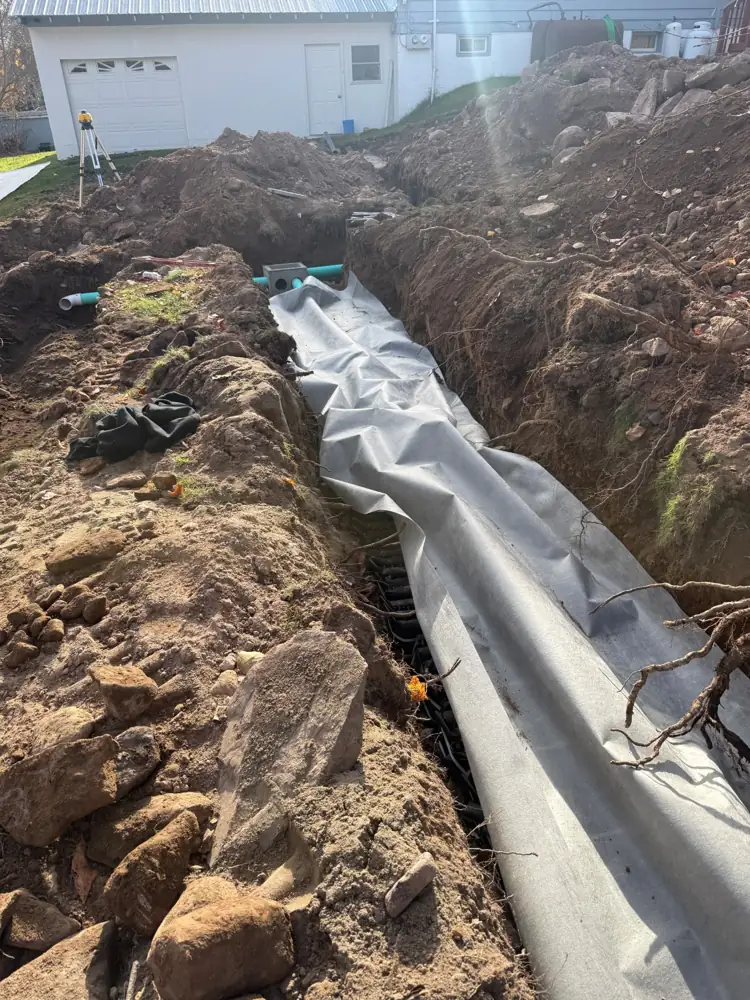
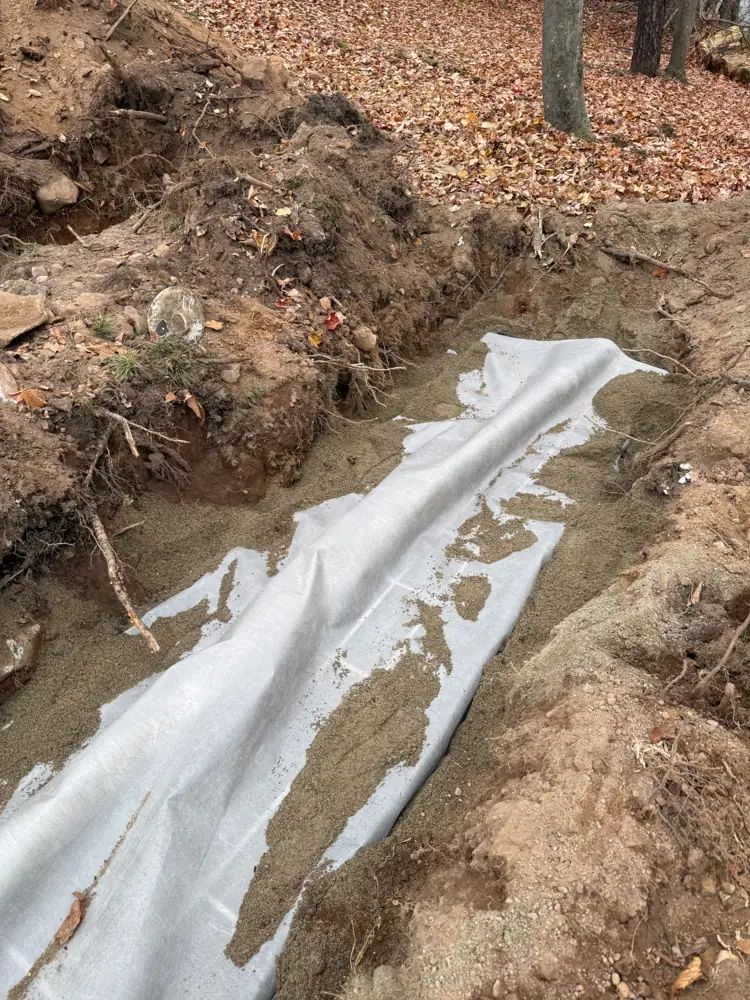
The replacement included two Eljen fields. The installation photos show the modules, piping and cover fabric before the field areas were backfilled.
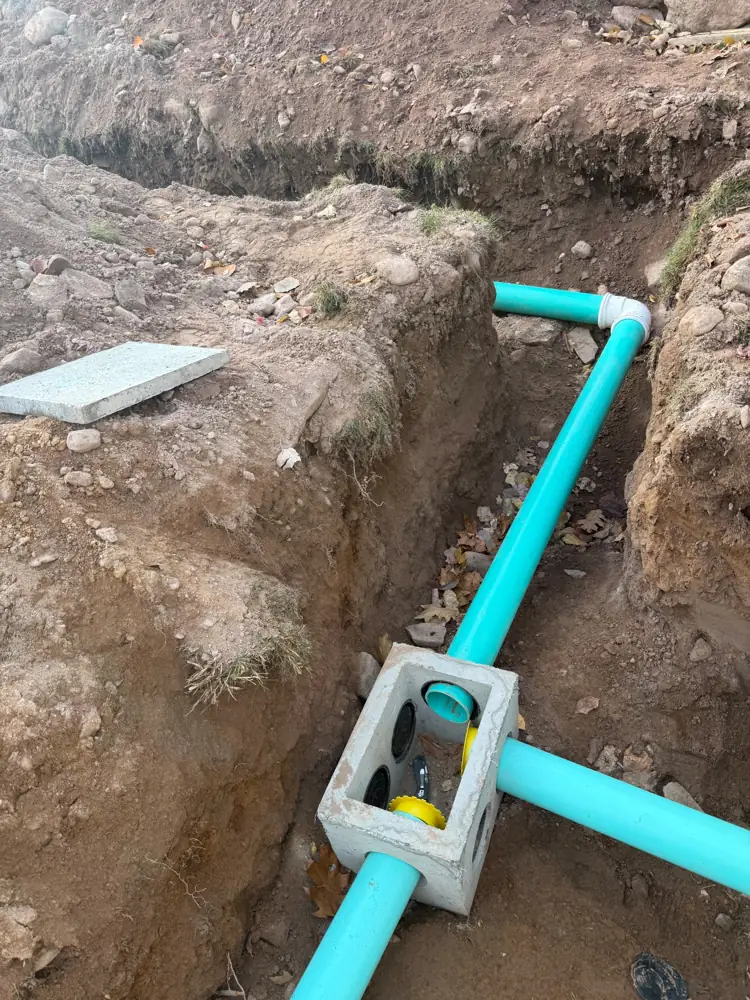
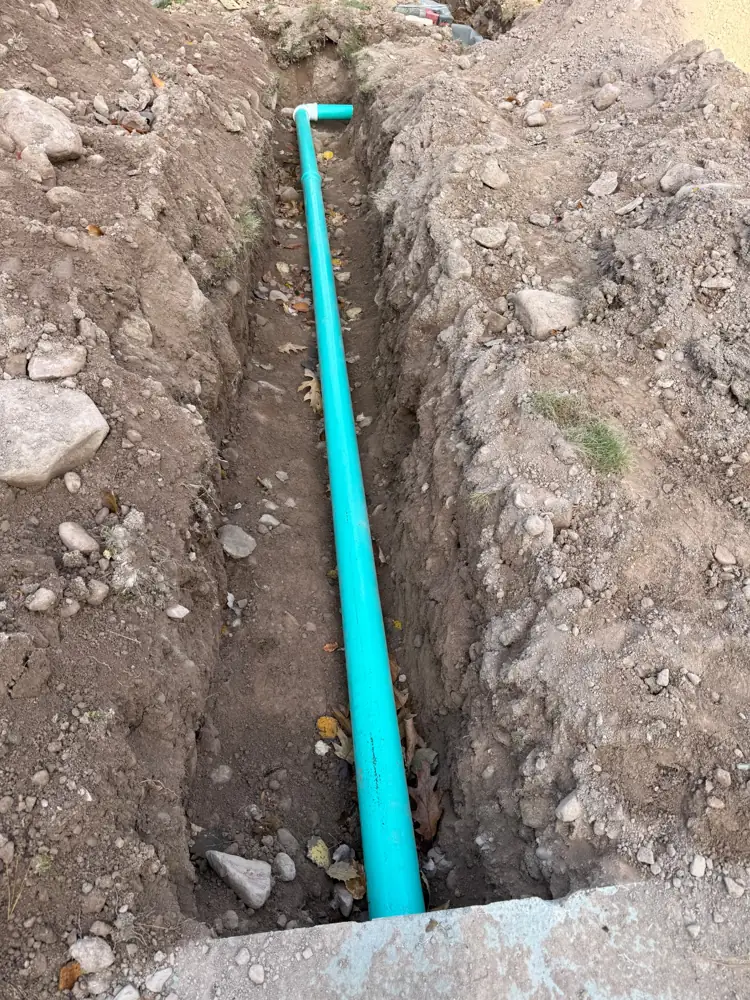
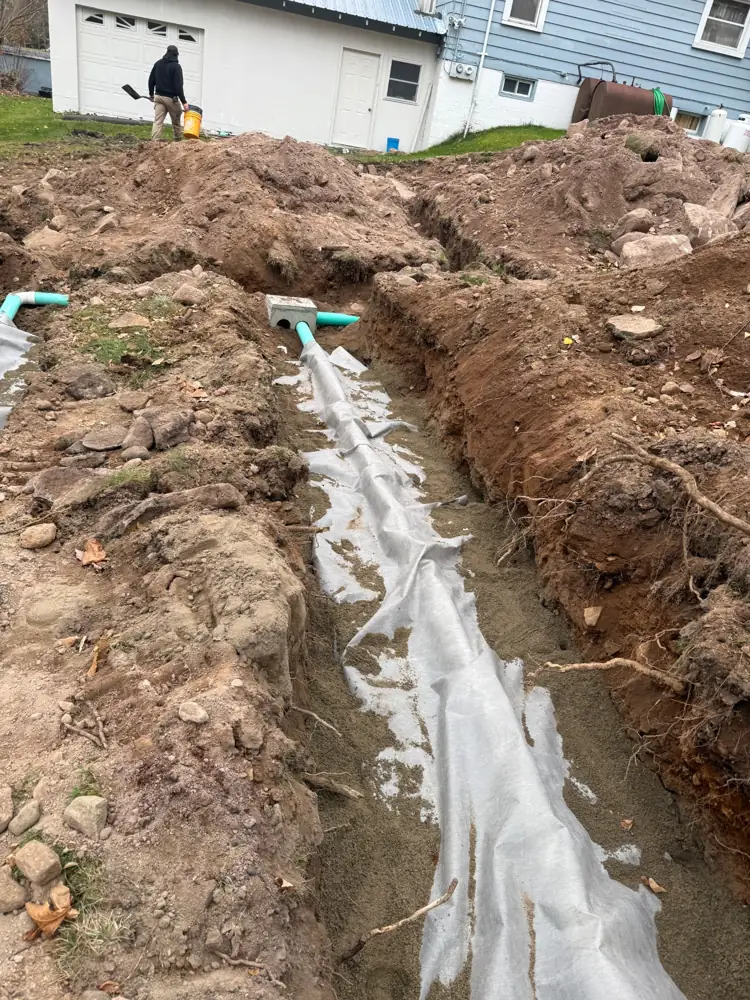
New piping and a concrete distribution box connect the work together. These connections are an important part of the system, even though they disappear from view after backfilling.
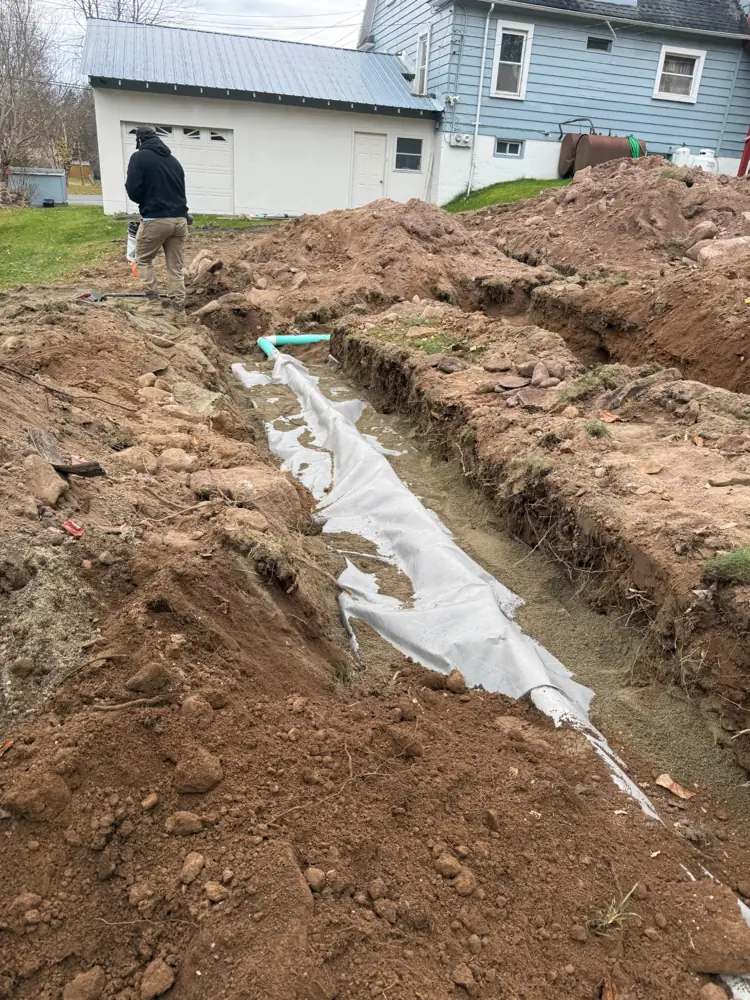
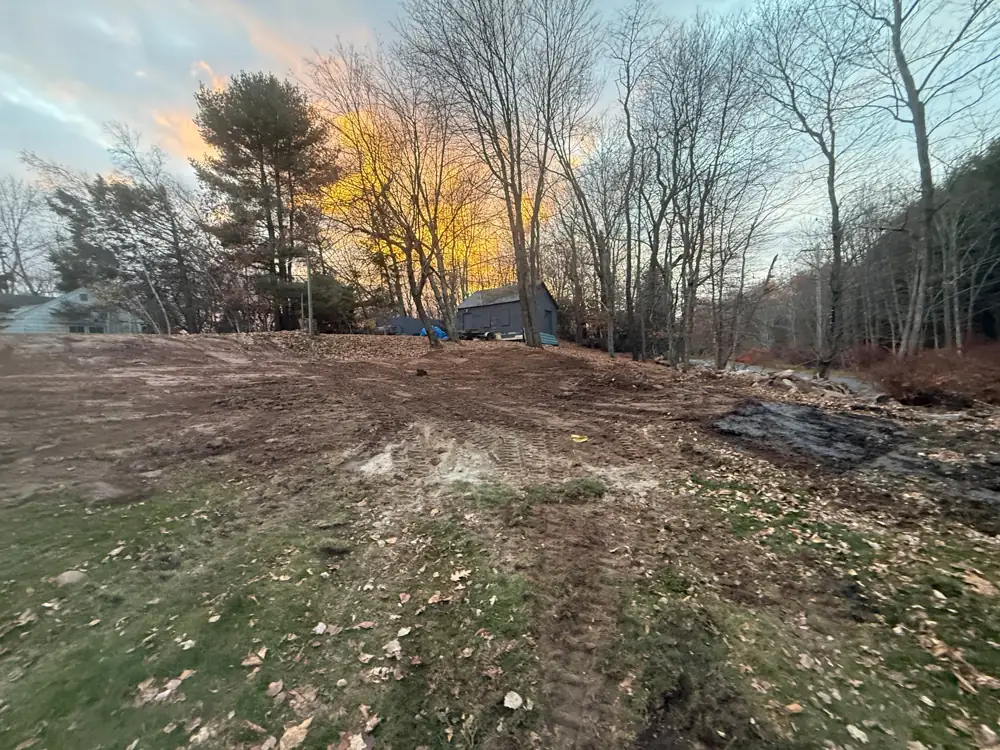
The same property at two stages of the replacement. The final photos show backfilled ground; the lawn has not yet grown back.
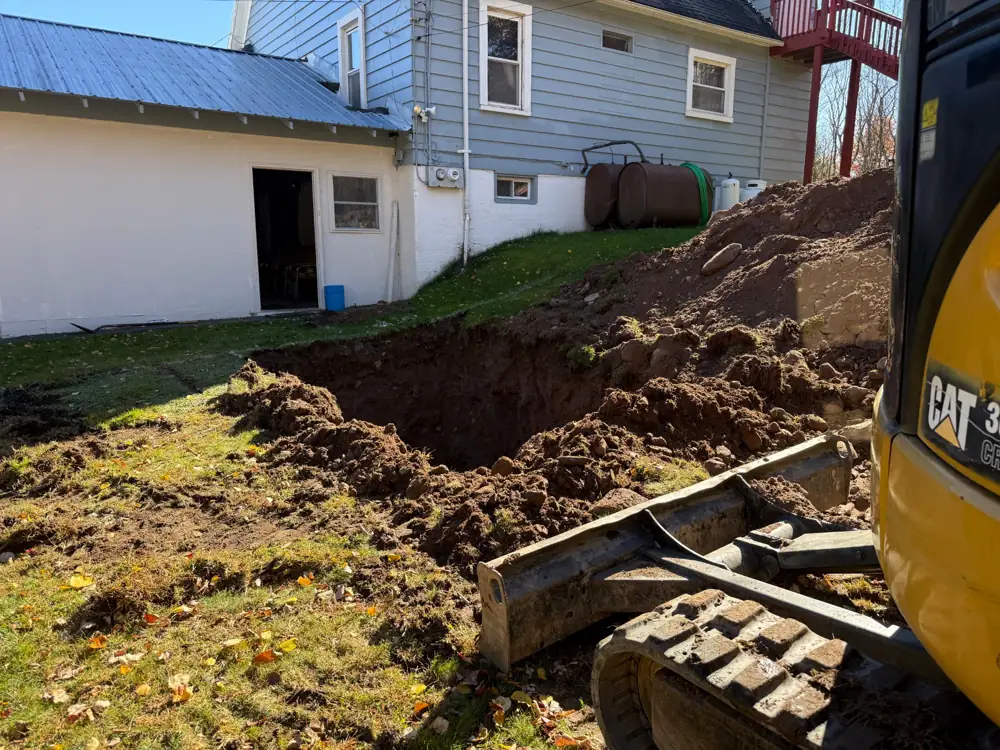
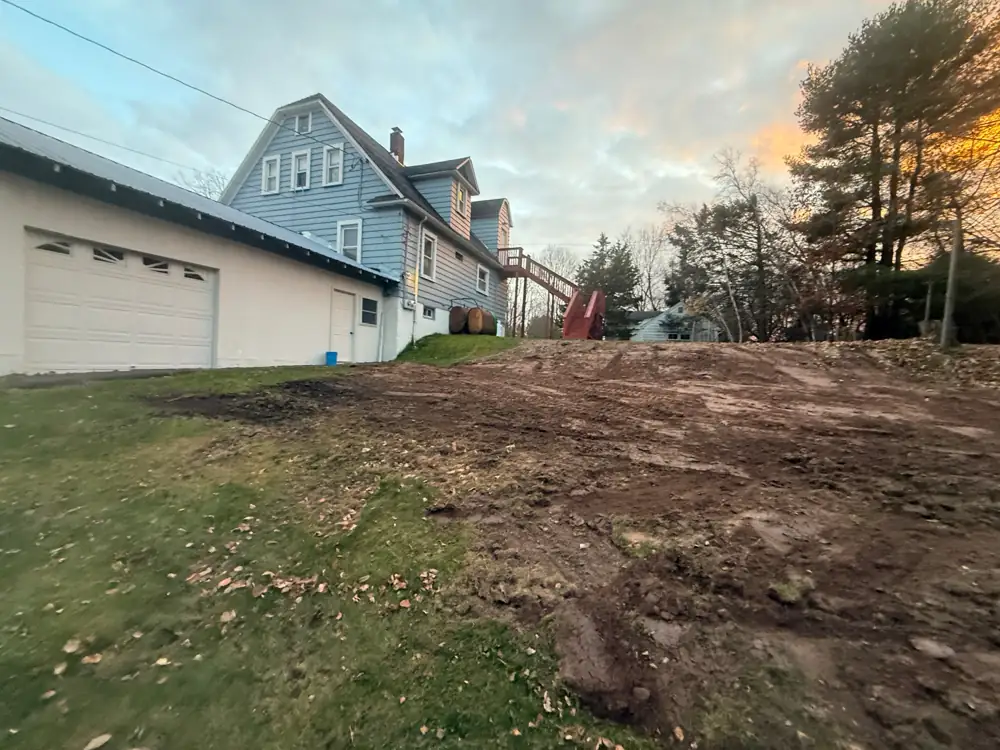
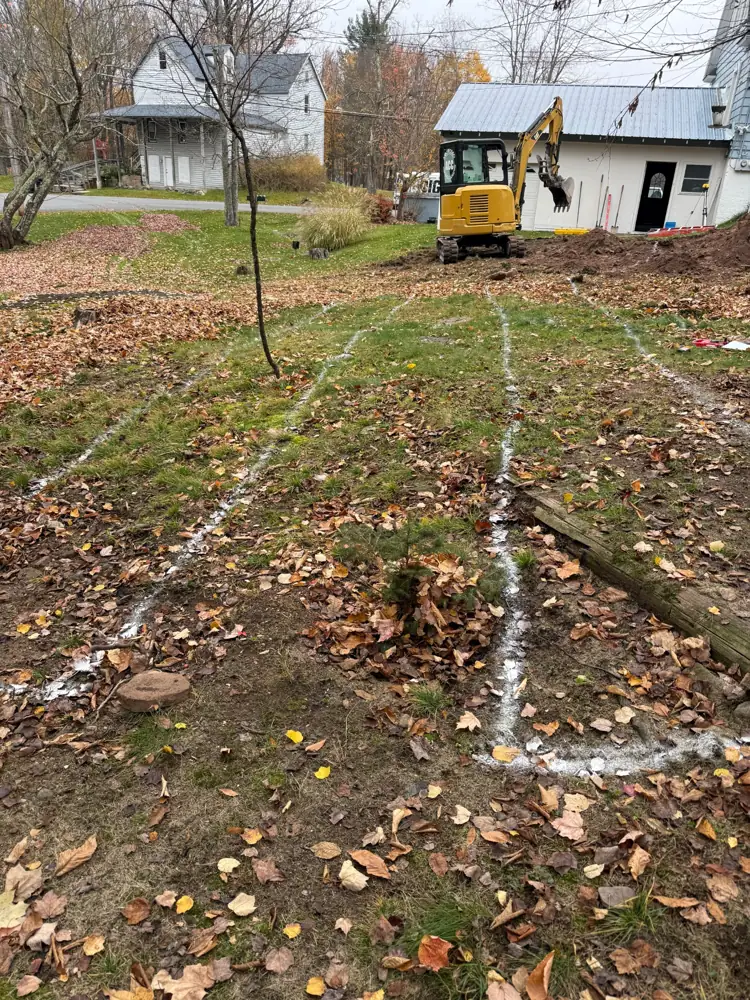
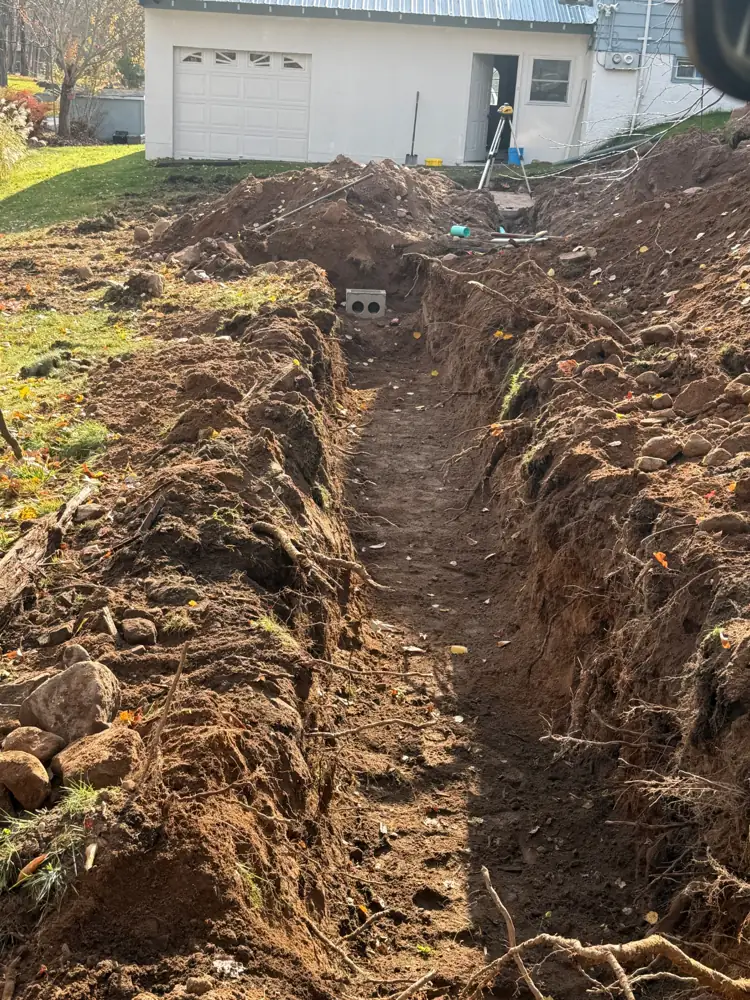
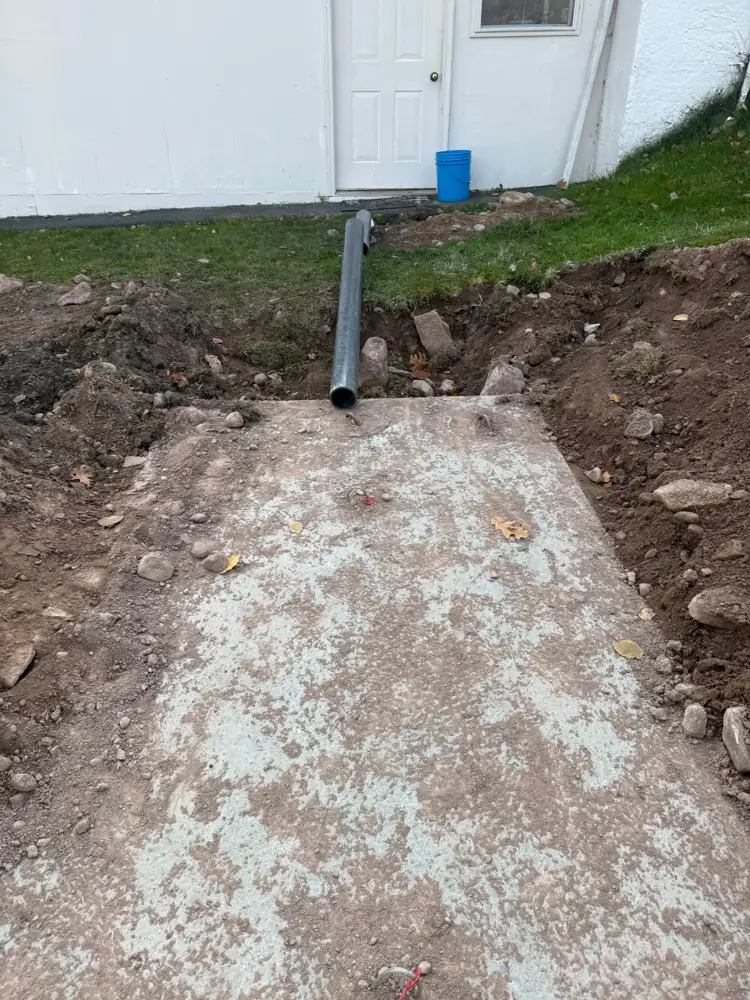
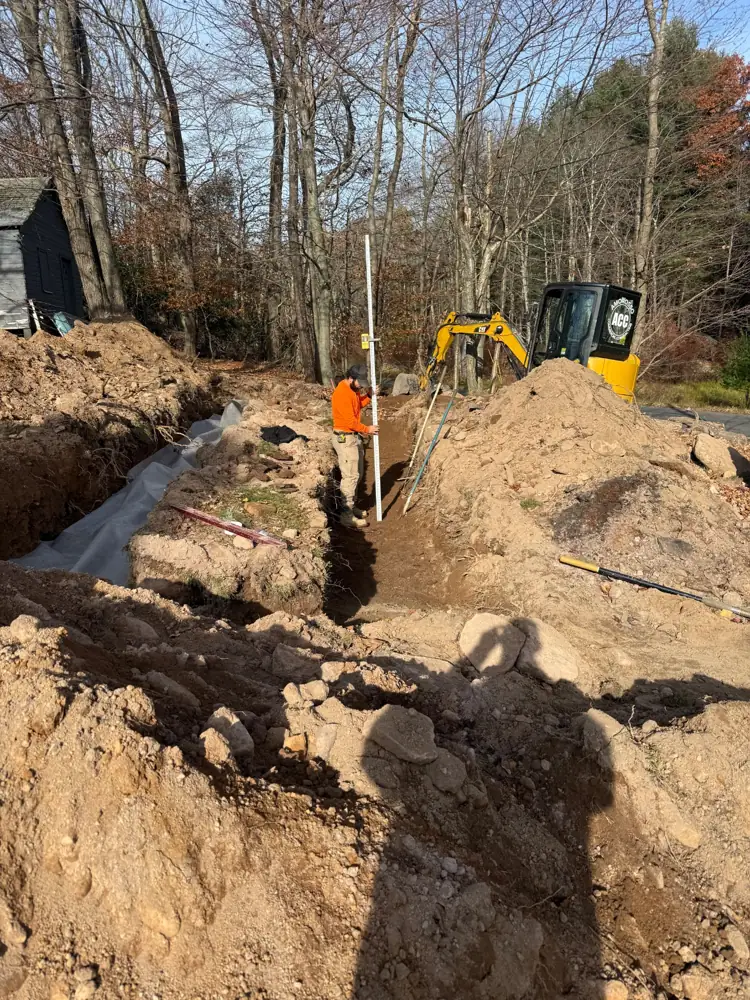
The work began with excavation for the new system. These photos show the tank area and trenches while the ground was open, with existing site conditions visible before installation and backfilling.
A replacement project has to fit an existing property. The house, available access and the route between the tank and fields all matter when planning the work.
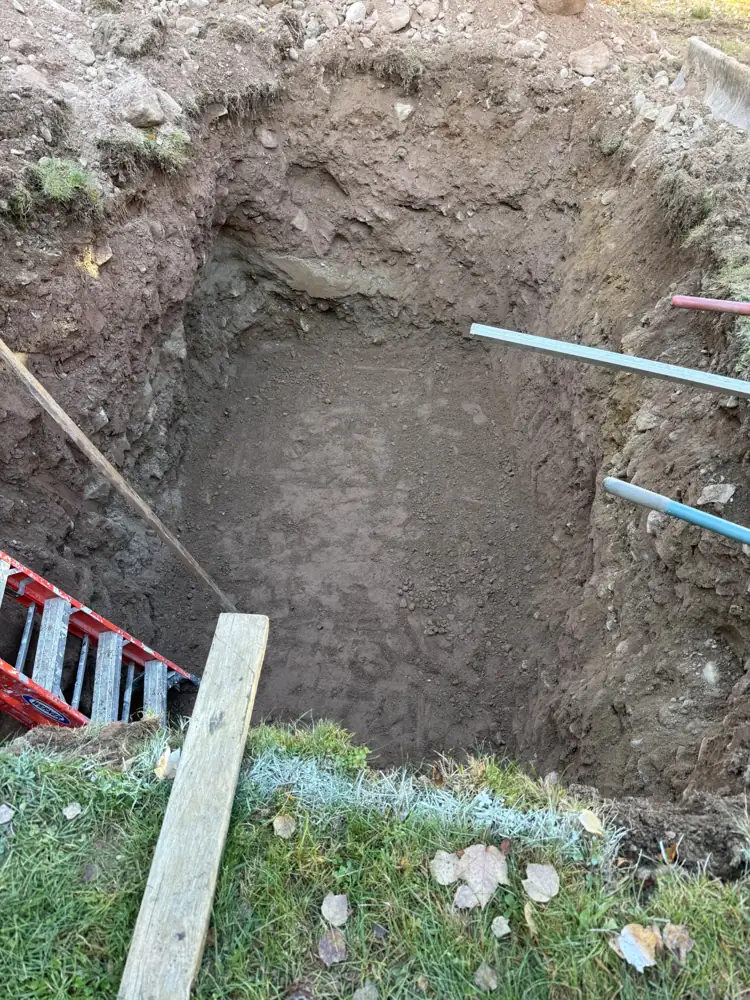
The distribution-box photo gives a close look at the new pipe connections. Once liquid leaves the septic tank, the distribution system directs it toward the field areas.
It is easy to focus on the size of a new tank. The piping and distribution components deserve attention too: they are part of how the complete system operates.
Before covering, the Eljen modules and pipework are clearly visible in the trenches. This is the best stage to see what sits beneath the finished yard.
Eljen is an option we like for the right project. Choosing it still depends on the property, soil conditions and system design—not simply on a product name.
The later photos show cover fabric over the field components, followed by backfilling and grading. The finished surface hides most of the installation, which is why we document the work while it is still visible.
This Monticello replacement brought together the new concrete tank and two Eljen fields as one complete septic project.
Eljen GSF stands for Geotextile Sand Filter. Its modules combine a plastic core and geotextile fabric, with specified sand as part of the treatment system. The modules support biological treatment, and the sand provides additional filtration before effluent reaches the native soil.
For homeowners, the important question is whether the system suits the property. Eljen offers a modular approach to field installation, but field sizing, soil conditions, elevations and local requirements still need to guide the design.
We like Eljen as an option worth discussing. We also believe a good recommendation should explain why it fits your particular job.
Learn more about the technology from Eljen’s GSF overview, or explore our Eljen and pump-up system page.
Actual project photos taken during excavation, installation and backfilling. Select any photo to open a larger version.
This project shows one solution for one Monticello property. Your tank size, field layout and scope of work may be different.
No. A problem with a pipe, tank component or another accessible part may call for a more limited repair. Investigation helps establish what work is needed before committing to a full replacement.
Not necessarily. That is the size used on this project. The appropriate tank and field sizes for another property depend on its design requirements.
The tank, field design, access, excavation conditions, piping and restoration all influence the scope. Share your property location and any plans or inspection findings so we can discuss your project.
Yes. Dig Something Septic serves properties across Orange, Sullivan and Ulster Counties, New York. Contact Dominick to discuss your location and the work you need.
Tell us where the property is, what you know about the existing system and what needs attention. We’ll talk through the next steps for your project.