Dig Something Septic · Dry wells & site evaluation

Dry well installation starts with the right site.

Considering a dry well for runoff, or dealing with an older septic seepage pit? Talk with Dominick about the problem, your property and the evaluations needed before choosing a solution.

Serving Orange, Sullivan and Ulster Counties, NY.

Speak directly with Dominick, the owner.

Our work · Ulster County, NY

See the work beneath the finished yard.

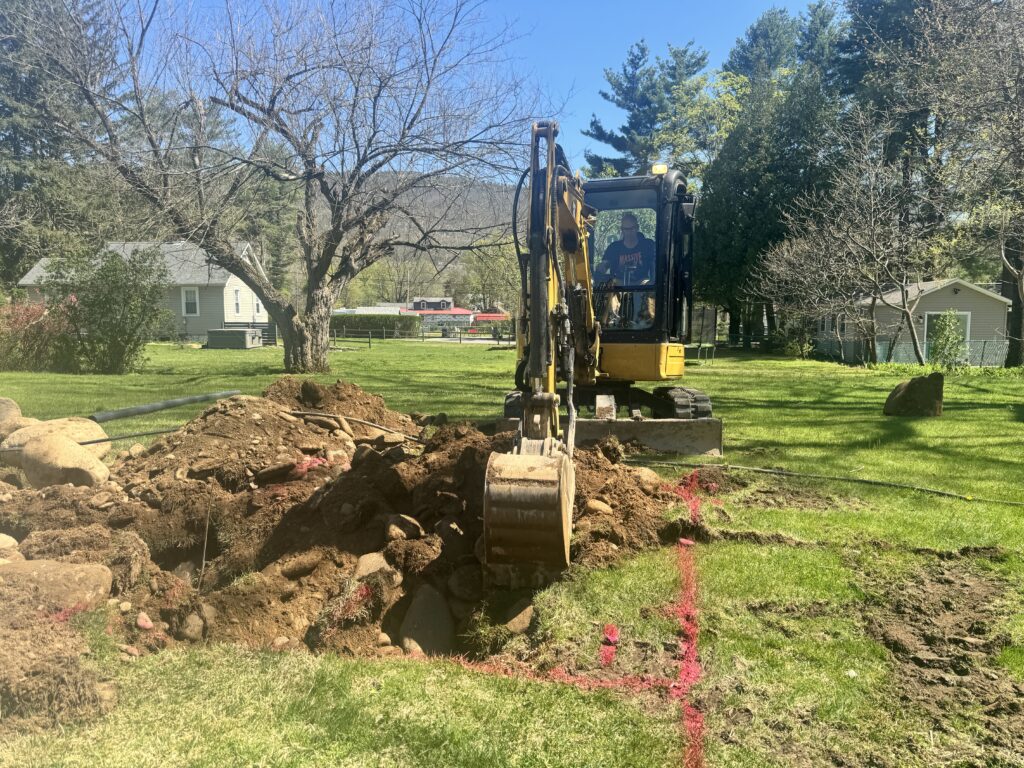
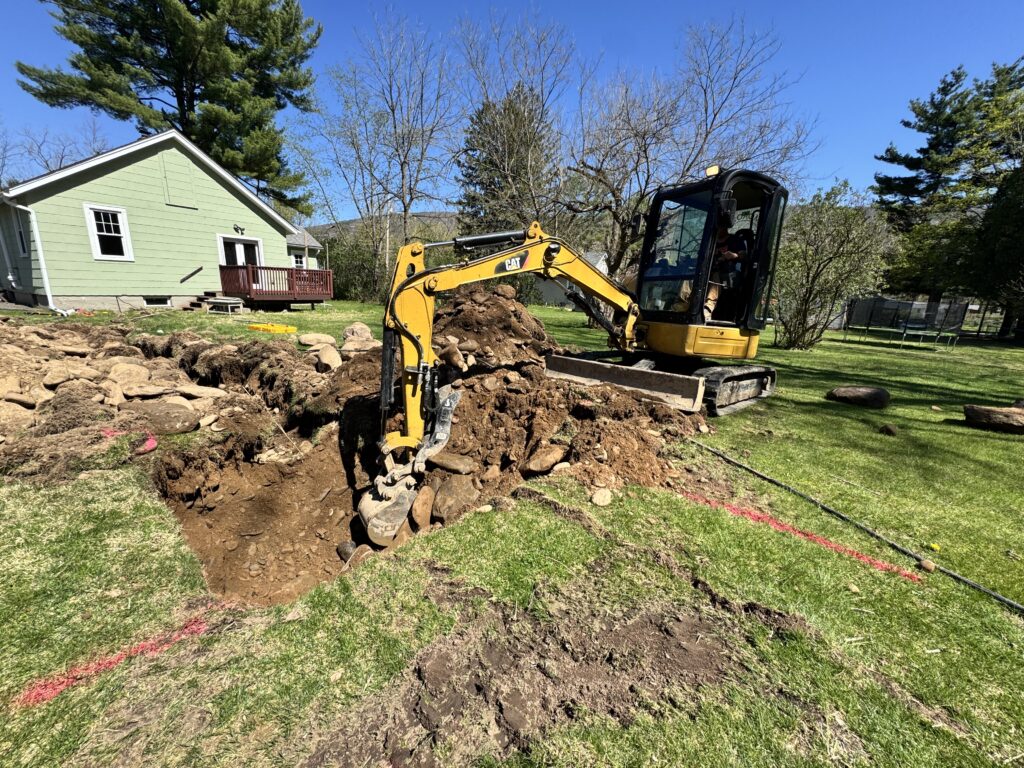
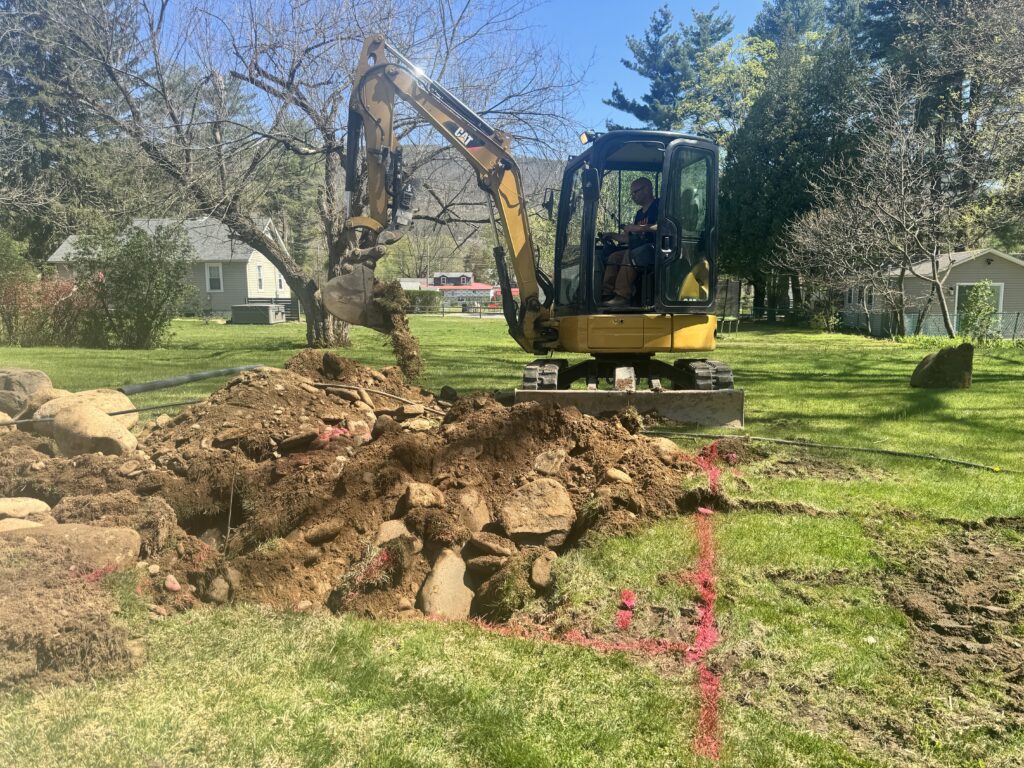
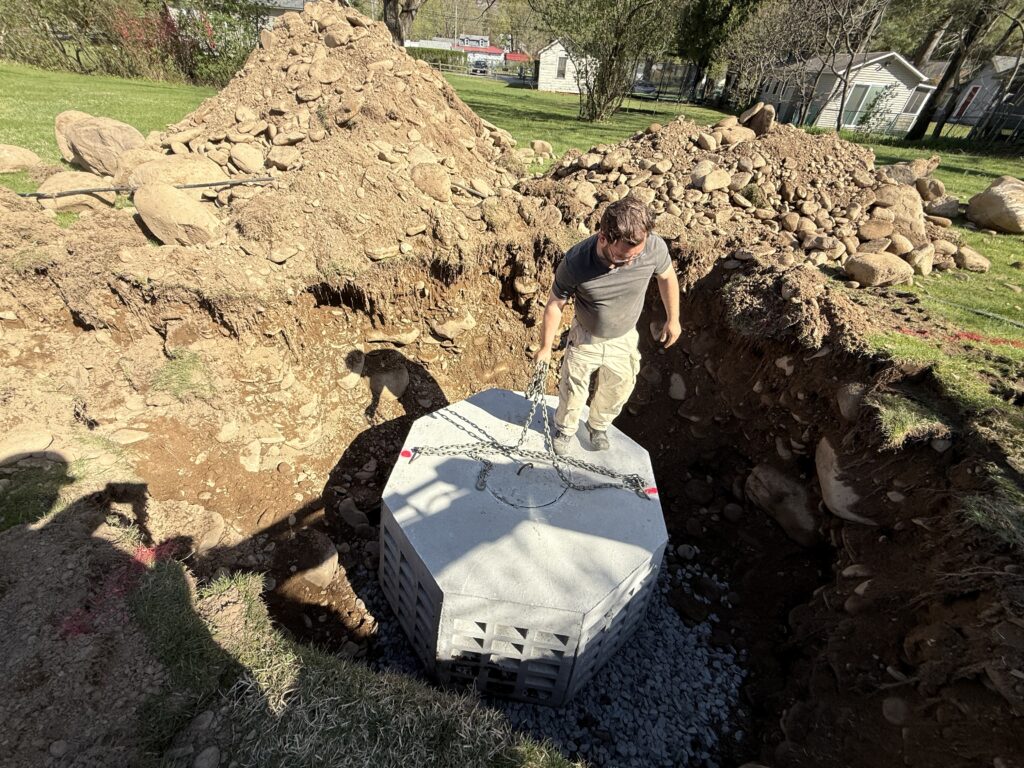
These photos from our Ulster County dry well project show the excavation, site conditions and concrete structure during installation.

The work below ground is only part of the decision. The intended use, soil conditions and applicable approvals determine whether a dry well is appropriate for a particular property.

Precast concrete dry well structure positioned in an excavation with stone around its base
A concrete dry well structure during the Ulster County project. This is a project example, not a design recommendation for another property.
First, define the purpose

Stormwater and septic wastewater need different plans.

The term “dry well” gets used for more than one kind of underground structure. Start by identifying what water it receives and where that water comes from.

Rainfall & runoff

A stormwater dry well

A stormwater dry well receives runoff and allows it to infiltrate into suitable surrounding soil. Its usefulness depends on the site, the volume of runoff and how the system is designed.

Tell us where water collects, where it comes from and whether the problem occurs only during heavy rain or continues afterward.

Septic wastewater

A septic seepage pit

A seepage pit receives wastewater after it passes through a septic tank. It is different from a stormwater dry well and from a cesspool receiving sewage directly.

It is not an automatic substitute for a drain field. Its use must be evaluated against the site conditions and applicable wastewater requirements.

Before installation

The ground matters as much as the structure.

A larger concrete structure does not make an unsuitable site suitable. The proposed system needs to match the property and its intended use.

Soil & infiltration

How readily water moves through the soil is part of the evaluation. A test result is useful information, but it does not by itself establish that a complete design will work or be approved.

Groundwater & available space

Seasonal groundwater, bedrock and the locations of wells, buildings and other site features can limit the options. Those constraints need to be understood before selecting a location.

Design & approvals

Confirm the required testing, engineering and approvals for the proposed work. A project completed on another property is not proof that the same arrangement is appropriate for yours.

Project gallery

Dry well work in Ulster County.

Five photos from the project. Select an image to open a larger view.

An existing system with problems

Investigate the cause before replacing the structure.

Describe the symptoms, when they started and any earlier cleaning, pumping or repair work. A restricted pipe, a structural problem and poor infiltration may call for different responses.

If accessible piping needs investigation, camera inspection and locating can help clarify its condition and route. Those tools do not measure the surrounding soil’s ability to accept water.

A replacement location needs its own evaluation.

Do not assume that installing a new structure in the same hole—or simply moving it elsewhere—will solve the underlying issue.

Review the cause of the problem and the proposed replacement location before committing to the work. We can discuss the construction scope and share engineer contacts when design assistance is needed.

A practical path forward

Start with the property and the problem.

You do not need to arrive with a finished plan. Bring the information you have, and we’ll discuss what needs to be established next.

  1. Identify the intended use.

    Is this runoff management or part of an existing septic system? Share your location and the issue you want addressed.

  2. Discuss the site evaluation.

    Review available records and the testing or professional evaluation needed for the proposed work.

  3. Confirm the design requirements.

    Establish the appropriate design and approval process before scheduling installation.

  4. Review the construction scope.

    Discuss access, excavation, connections, any existing structure and restoration included in the estimate.

Common questions

Is a dry well right for your property?

Call 845-239-2414 to start with your location and intended use.

Can a dry well replace a septic drain field?

Do not assume it can. New York’s residential wastewater standards restrict the use of seepage pits, including where conditions are adequate for absorption trenches. A qualified design professional and the reviewing authority need to determine the appropriate option for the property.

Does a successful perc test mean I can install one?

No. Soil testing is only part of the evaluation. The intended use, groundwater, bedrock, available space and approval requirements also matter.

Will a bigger dry well fix standing water?

Not necessarily. The source and amount of water, soil conditions and the existing drainage arrangement need to be understood. More storage alone may not address the cause.

Can I combine roof runoff with my septic system?

Do not treat a stormwater dry well and a septic seepage pit as interchangeable. Tell us about both systems so their needs can be considered separately in the proposed work.

Are septic dry wells allowed everywhere in Ulster County?

No county-wide promise should be made from a single project. Confirm the current requirements for your address, site conditions and proposed design with the responsible reviewing authority.

What affects the installation cost?

Testing and design needs, excavation access, soil and rock conditions, the specified structure, piping and restoration all affect the scope. Share your project details so we can discuss the next step toward an estimate.

Related services

Septic locating

Locate accessible piping and investigate the position of a problem area.

Explore locating →

Background resources: EPA’s stormwater drainage well guidance and New York State’s septic system resources.

Orange · Sullivan · Ulster Counties, NY

Get a plan that fits your property.

Tell Dominick what you are trying to solve. We’ll discuss the site, the intended use and the next step toward an appropriate solution.

Scroll to Top